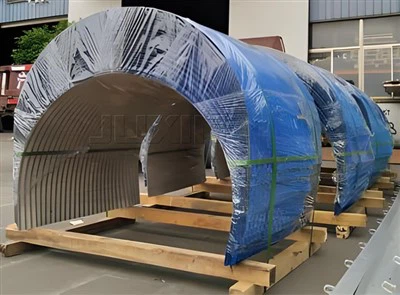
Hey there! As a supplier of impact beds, I often get asked about wear resistance. It's a super important aspect when it comes to these products, so I thought I'd break it down for you.
Let's start by understanding what an impact bed is. An impact bed is a crucial part of belt conveyor systems. It's designed to support the conveyor belt at loading points where heavy materials are dropped onto it. This helps to reduce the impact on the belt, preventing damage and extending its lifespan. But the wear resistance of an impact bed is what really determines how well it can do its job over time.
Wear resistance refers to the ability of a material or a product to withstand the effects of wear. In the case of impact beds, wear can occur due to a variety of factors. One of the main causes is the abrasion from the materials being transported on the conveyor belt. When heavy rocks, ores, or other abrasive substances are dropped onto the impact bed, they can scrape and wear away at the surface. Another factor is the constant mechanical stress from the movement of the belt and the impact of the materials. This can cause fatigue and eventually lead to wear and tear.
So, what makes an impact bed wear-resistant? Well, it all starts with the materials used in its construction. High-quality impact beds are typically made from materials that are known for their excellent wear resistance. For example, some impact beds feature wear-resistant liners made from ultra-high molecular weight polyethylene (UHMWPE). This material has a very low coefficient of friction, which means that materials slide across it easily, reducing abrasion. It's also extremely tough and can withstand a lot of impact without cracking or breaking.
Another important factor is the design of the impact bed. A well-designed impact bed will distribute the impact of the materials evenly across the surface. This helps to prevent concentrated areas of wear. For instance, some impact beds have a modular design with multiple support bars. This design allows the load to be spread out, reducing the stress on any one part of the bed. Additionally, the shape and arrangement of the support bars can also affect wear resistance. Some bars are tapered or have a curved shape, which helps to guide the materials smoothly across the bed, reducing the likelihood of abrasion.
Now, let's talk about the different types of impact beds we offer and how their wear resistance varies.
We have the Heavy Duty Impact Bed. As the name suggests, this is designed for the toughest applications. It's built to handle large, heavy materials and high-impact loads. The wear-resistant liners on this impact bed are made from a special grade of UHMWPE that can withstand extreme abrasion. The support bars are also thicker and stronger, providing better support and reducing the risk of wear. Whether you're in the mining industry or dealing with heavy construction materials, this impact bed is a great choice for long-lasting wear resistance.
Our Quarry Duty Impact Bed is specifically designed for quarrying operations. Quarries deal with a lot of abrasive rocks and stones, so wear resistance is crucial. This impact bed has a unique design that's optimized for the high-impact and high-abrasion environment of a quarry. The wear liners are made from a blend of materials that offer excellent resistance to both impact and abrasion. The support structure is also reinforced to handle the heavy loads and constant movement common in a quarry.
If you're looking for a more general-purpose impact bed, our Impact Bed for Belt Conveyor is a great option. It's suitable for a wide range of industries and applications. The wear resistance of this impact bed is still very good, thanks to its high-quality materials and well-thought-out design. It provides reliable support for the conveyor belt and helps to minimize wear and tear.
In real-world applications, the wear resistance of an impact bed can have a significant impact on your operations. A wear-resistant impact bed will require less maintenance and replacement. This means less downtime for your conveyor system, which translates to increased productivity. For example, if you have an impact bed that wears out quickly, you'll have to stop the conveyor to replace it. This can lead to delays in production and increased costs. On the other hand, a wear-resistant impact bed will keep running smoothly for a longer time, reducing these issues.


Another benefit of a wear-resistant impact bed is cost savings. Although a high-quality, wear-resistant impact bed may cost more upfront, it will save you money in the long run. You won't have to keep buying new impact beds or paying for frequent repairs. This can add up to significant savings over time.
So, if you're in the market for an impact bed, wear resistance should be one of your top considerations. When you choose an impact bed from us, you're getting a product that's designed and built to provide excellent wear resistance. Our team of experts can help you select the right impact bed for your specific application, taking into account factors like the type of materials you're transporting, the load size, and the operating conditions.
If you're interested in learning more about our impact beds or have any questions about wear resistance, don't hesitate to reach out. We're here to help you make the best choice for your conveyor system. Whether you're a small business or a large industrial operation, we have the right impact bed for you. Contact us today to start the conversation and see how our wear-resistant impact beds can improve your operations.
References
- Conveyor Belt Handbook: A comprehensive guide on conveyor systems and their components, including impact beds.
- Journal of Mining and Materials Handling: Articles on the latest research and developments in the field of conveyor technology, with a focus on wear resistance.
- Manufacturer's specifications and product literature for our impact beds.