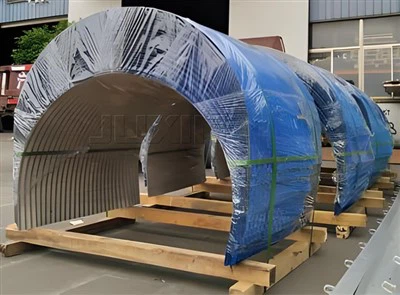
Measuring for a custom belt cover is a crucial step in ensuring that you get a perfect fit for your conveyor system. As a trusted belt cover supplier, we understand the importance of accurate measurements to provide you with a high - quality, custom - made belt cover that meets your specific needs. In this blog, we'll guide you through the process of measuring for a custom belt cover.
Understanding the Basics of Belt Covers
Before diving into the measurement process, it's essential to understand what belt covers are and their functions. Belt covers, also known as Conveyor Belt Covers, are protective enclosures designed to shield conveyor belts from various elements such as dust, debris, moisture, and environmental factors. They also enhance safety by preventing access to moving parts of the conveyor system. Conveyor Cover Hood and Conveyor Hood are similar terms often used interchangeably, referring to the same type of protective structure.
Tools Required for Measuring
To measure accurately for a custom belt cover, you'll need a few basic tools:


- Measuring Tape: A long, flexible measuring tape is essential for taking linear measurements. A tape measure with both metric and imperial units is ideal, as it allows for flexibility depending on your requirements.
- Level: A level helps ensure that the conveyor is straight and correctly aligned. This is important because an uneven conveyor can lead to inaccurate measurements and a poorly fitting belt cover.
- Notebook and Pen: You'll need to record all your measurements accurately. A notebook and pen are simple yet effective tools for this purpose.
Step - by - Step Measurement Process
1. Measure the Conveyor Belt Width
The first and most fundamental measurement is the width of the conveyor belt. Start by measuring the distance between the two outer edges of the conveyor belt at several points along its length. This is because conveyor belts can sometimes vary slightly in width due to manufacturing tolerances or wear and tear. Take the average of these measurements to get the most accurate belt width.
2. Determine the Conveyor Length
Next, measure the length of the conveyor. This is the distance from the start of the conveyor (where the belt begins to move) to the end (where it stops). If your conveyor has multiple sections or curves, measure each section separately and then add up the lengths. Make sure to measure along the centerline of the conveyor belt for the most accurate result.
3. Measure the Height of the Conveyor
The height of the conveyor is another important measurement. Measure from the floor or the supporting structure to the top surface of the conveyor belt. This measurement is crucial for determining the vertical clearance required for the belt cover. You may need to take multiple height measurements at different points along the conveyor, especially if the conveyor has an incline or decline.
4. Account for Conveyor Supports and Structures
Take note of any conveyor supports, frames, or other structures that may interfere with the installation of the belt cover. Measure the distance between these structures and the conveyor belt, as well as their height and width. This information will help us design a belt cover that can be installed without any obstructions.
5. Measure the Curves (if applicable)
If your conveyor has curves, you'll need to measure the radius of each curve. Use a flexible measuring tape to measure the distance from the center of the curve to the outer edge of the conveyor belt. Also, measure the angle of the curve. These measurements are essential for creating a belt cover that can conform to the curve of the conveyor.
6. Check for Clearance Requirements
In addition to the basic measurements, you need to consider any clearance requirements. For example, if there are any sensors, motors, or other equipment near the conveyor, you'll need to ensure that the belt cover provides enough clearance for these components to operate properly. Measure the distance between the conveyor and these nearby objects and include this information in your measurements.
Special Considerations
- Environmental Conditions: If the conveyor is located in an area with extreme temperatures, high humidity, or exposure to chemicals, you'll need to choose a belt cover material that can withstand these conditions. Make sure to provide us with details about the environmental conditions so that we can recommend the appropriate material.
- Access Requirements: Consider how often you'll need to access the conveyor belt for maintenance or inspection purposes. This will determine the type of access openings and doors that should be included in the belt cover design. Measure the size and location of any required access points.
Double - Check Your Measurements
Once you've taken all the measurements, it's crucial to double - check them for accuracy. Review your notes and re - measure any dimensions that seem incorrect or inconsistent. A small error in measurement can lead to a belt cover that doesn't fit properly, so it's worth taking the time to ensure accuracy.
Contact Us for Your Custom Belt Cover
At our company, we have years of experience in manufacturing high - quality custom belt covers. Once you've completed the measurement process, you can share your measurements with us, and our team of experts will work with you to design a belt cover that meets your exact specifications. Whether you need a simple, straight - run belt cover or a complex system with curves and multiple sections, we have the expertise and resources to deliver a solution that exceeds your expectations.
If you're ready to start the process of getting a custom belt cover, please reach out to us. We'll be happy to answer any questions you may have and guide you through the next steps. Our goal is to provide you with a belt cover that not only fits perfectly but also enhances the performance and safety of your conveyor system.
References
- Conveyor Belt Handbook: A comprehensive guide to conveyor systems and components.
- Industry standards for conveyor belt covers and enclosures.