Belt deviation
To solve such faults, it is important to pay attention to the dimensional accuracy of installation and daily maintenance. There are various reasons for deviation, and it needs to be handled differently according to different reasons.
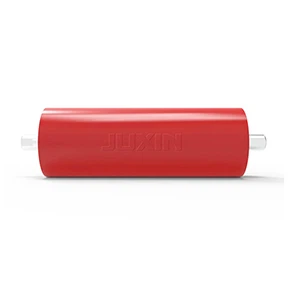
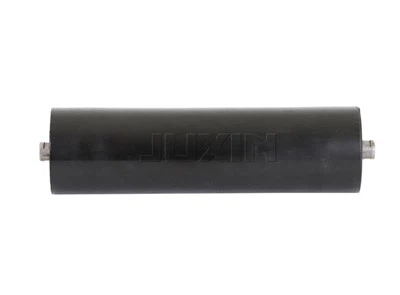
1 . When the belt of the belt conveyor carrying the roller group deviates in the middle of the entire belt conveyor, the position of the roller group can be adjusted to adjust the deviation; During manufacturing, the mounting holes on both sides of the roller group are machined into long holes for adjustment. The specific adjustment method is to determine which side the belt is biased towards, which side of the roller group moves forward towards the direction of the belt, or which side moves backward towards the other side.
2. Install the self-aligning roller assembly. There are various types of self-aligning roller groups, such as intermediate shaft type, four-bar linkage type, vertical roller type, etc. The principle is to use blocking or roller rotation in the horizontal plane to block or generate lateral thrust, so that the belt automatically centers to achieve the purpose of adjusting belt deviation. It is generally reasonable to use this method when the total length of the belt conveyor is short or when the belt conveyor is running in both directions, because shorter belt conveyors are more prone to deviation and difficult to adjust. It is best not to use this method for long belt conveyors, as the use of self-aligning roller sets can have a certain impact on the service life of the belt.
3. Adjust the position of the drive drum and the reversing drum. The adjustment of the driving drum and the reversing drum is an important part of adjusting belt deviation. Because a belt conveyor has at least 2 to 5 rollers, the installation position of all rollers must be perpendicular to the centerline of the length direction of the belt conveyor. If the deviation is too large, it will inevitably cause deviation. The adjustment method is similar to adjusting the roller group. For the head drum, if the belt deviates to the right of the drum, the right bearing seat should move forward. If the belt deviates to the left of the drum, the left bearing seat should move forward. Correspondingly, the left bearing seat can also be moved backward or the right bearing seat can be moved backward. The adjustment method of the tail drum is exactly opposite to that of the head drum. Adjustment method. After repeated adjustments, the belt was adjusted to the ideal position. It is best to accurately install the position of the drive or steering drum before adjusting it.
4. Adjustment of tension. The adjustment of belt tension is a very important step in the adjustment of belt conveyor deviation. The two deflection rollers at the upper part of the heavy hammer tensioning point should be perpendicular to the vertical line of gravity in addition to the length direction of the belt, ensuring that their axis centerlines are horizontal. When using spiral tensioning or hydraulic cylinder tensioning, the two bearing seats of the tensioning drum should translate simultaneously to ensure that the drum axis is perpendicular to the longitudinal direction of the belt. The specific adjustment method for belt deviation is similar to the adjustment at the drum.
5. The impact of material dropping position at the transfer point on belt deviation. The dropping position of the material at the transfer point has a significant impact on the deviation of the belt, especially when the two belt conveyors are projected vertically in the horizontal plane. Usually, the relative height between the upper and lower belt conveyors at the transfer point should be considered. The lower the relative height, the greater the horizontal velocity component of the material, and the greater the lateral impact on the lower belt, while the material is also difficult to center. Skewness of material on the cross-section of the belt ultimately leads to belt deviation. If the material deviates to the right, the belt will deviate to the left, and vice versa. During the design process, the relative height of the two belt conveyors should be increased as much as possible. The form and size of the upper and lower funnels, guide troughs, and other components of mobile bulk conveying machinery that are limited by space should be carefully considered. The width of the general guide groove should be about two-thirds of the width of the belt, which is more suitable. To reduce or avoid belt deviation, a blocking plate can be added to block the material and change the direction and position of the material's fall.
6 . Adjustment of the deviation of the bidirectional running belt conveyor. The adjustment of belt deviation of two-way belt conveyor is relatively more difficult than that of one-way belt conveyor. In specific adjustment, one direction should be adjusted first, and then another. When adjusting, carefully observe the relationship between the direction of belt movement and the tendency of deviation, and make adjustments one by one. The focus should be on the adjustment of the driving drum and the reversing drum, followed by the adjustment of the idler and the material dropping point. At the same time, it should be noted that the force on the length direction of the belt section should be uniform when the belt is vulcanized, and the force on both sides should be as equal as possible when using a guide chain for traction.

Processing of scattering materials
The scattering of materials on belt conveyors is a common problem, and the reasons are also multifaceted. But the key is still to strengthen daily maintenance and upkeep.
1. The material spraying at the transfer point is mainly done at the drop hopper, guide chute, and other locations. If the belt conveyor is severely overloaded, the rubber skirt of the guide groove of the belt conveyor may be damaged, and the steel plate at the guide groove is designed to be far away from the belt, causing the rubber skirt to be too long and the material to rush out of the guide groove. The above situation can be solved by controlling transportation capacity and strengthening maintenance.
2. When the concave section belt is suspended, the scattering of material in the concave section belt interval will cause the belt to be suspended when the curvature radius of the concave section is small. At this time, the groove formation of the belt will change because the belt has already left the groove shaped roller group, and the groove angle generally becomes smaller, causing some material to be scattered out. Therefore, in the design phase, larger concave curvature radii should be used as much as possible to avoid such situations. If the concave section is designed as a non arc transition section in order to shorten the tail car on mobile mechanical ship loaders and stacker reclaimers, it is easier to sprinkle materials when the belt width is selected with a small margin.
3. The scattering of material when the belt deviates is due to a change in the height of the two edges of the belt during operation, with one side being higher and the other side being lower. The material is scattered from the lower side, and the solution is to adjust the deviation of the belt.
Related articles
Additional resources