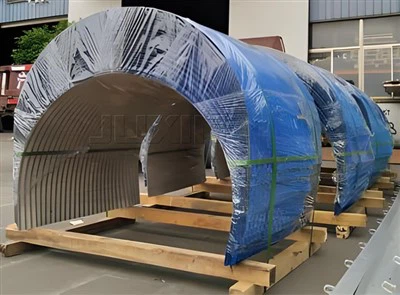
As a supplier of Conveyor Cover Hood, I've witnessed firsthand the challenges that cold environments pose to conveyor systems. Ice formation on conveyor cover hoods isn't just a minor inconvenience; it can lead to significant operational disruptions, safety hazards, and increased maintenance costs. In this blog, I'll share some effective strategies to prevent ice formation on conveyor cover hoods, drawing on my years of experience in the industry.
Understanding the Problem
Before we delve into solutions, it's crucial to understand why ice forms on conveyor cover hoods in cold environments. When the temperature drops below freezing, moisture in the air can condense on the surface of the hood. If the temperature remains low enough, this condensed moisture will freeze, forming ice. Additionally, any water splashing onto the hood from the conveyor belt or the surrounding environment can also freeze, contributing to ice buildup.
Ice formation on conveyor cover hoods can have several negative impacts. It can add extra weight to the hood, potentially causing structural damage over time. The ice can also interfere with the operation of the conveyor system, leading to jams and breakdowns. Moreover, ice on the hood can pose a safety risk to workers, as it may fall off unexpectedly and cause injuries.
Preventive Strategies
Insulation
One of the most effective ways to prevent ice formation on a conveyor cover hood is to insulate it. Insulation helps to maintain a more consistent temperature inside the hood, reducing the likelihood of condensation and freezing. There are several types of insulation materials available, including foam, fiberglass, and mineral wool.
When choosing an insulation material, consider its thermal conductivity, durability, and resistance to moisture. Foam insulation, for example, has a low thermal conductivity and is resistant to moisture, making it a popular choice for conveyor cover hoods. Fiberglass insulation is also a good option, as it is fire-resistant and has excellent thermal properties.
Installing insulation on a conveyor cover hood is a relatively straightforward process. First, measure the dimensions of the hood and cut the insulation material to fit. Then, attach the insulation to the inside of the hood using adhesive or mechanical fasteners. Make sure to seal any gaps or seams to prevent heat loss.
Heating Systems
Another effective strategy for preventing ice formation on a conveyor cover hood is to install a heating system. Heating systems can be used to raise the temperature of the hood and prevent moisture from freezing. There are several types of heating systems available, including electric heaters, hot water heaters, and steam heaters.
Electric heaters are a popular choice for conveyor cover hoods, as they are easy to install and operate. They can be installed on the inside or outside of the hood, depending on the specific requirements of the application. Hot water heaters and steam heaters are also effective, but they require more complex installation and maintenance.
When choosing a heating system, consider its power output, energy efficiency, and cost. Make sure to select a heating system that is appropriate for the size and type of conveyor cover hood. Additionally, it's important to follow all safety guidelines when installing and operating a heating system.
Ventilation
Proper ventilation is essential for preventing ice formation on a conveyor cover hood. Ventilation helps to remove moisture from the air inside the hood, reducing the likelihood of condensation and freezing. There are several types of ventilation systems available, including natural ventilation, mechanical ventilation, and exhaust fans.
Natural ventilation relies on the movement of air through openings in the hood, such as vents or louvers. Mechanical ventilation uses fans to circulate air through the hood, while exhaust fans are used to remove stale air and moisture from the inside of the hood.
When designing a ventilation system for a conveyor cover hood, consider the size and layout of the hood, as well as the amount of moisture generated by the conveyor system. Make sure to provide adequate ventilation to ensure that the air inside the hood remains dry and free of moisture.
Regular Maintenance
Regular maintenance is crucial for preventing ice formation on a conveyor cover hood. Inspect the hood regularly for signs of damage, such as cracks or holes, and repair them immediately. Clean the hood regularly to remove any dirt, debris, or moisture that may accumulate on the surface.


Additionally, check the insulation, heating system, and ventilation system regularly to ensure that they are functioning properly. Replace any worn or damaged components as needed. By performing regular maintenance, you can extend the lifespan of the conveyor cover hood and prevent ice formation.
Conclusion
Preventing ice formation on a conveyor cover hood in cold environments is essential for ensuring the safe and efficient operation of a conveyor system. By implementing the strategies outlined in this blog, such as insulation, heating systems, ventilation, and regular maintenance, you can reduce the likelihood of ice formation and minimize the negative impacts it can have on your operation.
If you're interested in learning more about Conveyor Cover Hood or need assistance in preventing ice formation on your conveyor cover hood, please don't hesitate to contact us. We're a leading supplier of Conveyor Belt Covers and Conveyor Hood, and we have the expertise and experience to help you find the right solution for your needs. Whether you're looking for insulation materials, heating systems, or ventilation solutions, we can provide you with high-quality products and professional advice.
References
- ASHRAE Handbook - HVAC Applications. American Society of Heating, Refrigerating and Air-Conditioning Engineers.
- Industrial Insulation Systems. Insulation Contractors Association of America.
- Conveyor Belt Handbook. Martin Engineering.