Are HDPE Rollers prone to cracking?
Hey there! I'm a supplier of HDPE rollers, and today, I want to dig into a question that's come up a lot lately: Are HDPE rollers prone to cracking?
First off, let's talk about what HDPE is. HDPE stands for High - Density Polyethylene. It's a type of plastic that's known for its high strength - to - density ratio. This material has found its way into countless applications, from plastic pipes to our beloved HDPE rollers.
HDPE rollers have some pretty great features. They're lightweight, which makes them easier to handle and install compared to their steel counterparts like the Steel Conveyor Roller. They also offer excellent corrosion resistance. This means they can work well in harsh environments where steel rollers might rust and degrade quickly. Another big plus is that HDPE rollers are relatively quiet during operation, which can be a huge advantage in noise - sensitive areas.
But back to the main question: cracking. Now, no material is completely immune to cracking, and HDPE is no exception. However, the likelihood of HDPE rollers cracking depends on several factors.
One of the most significant factors is the quality of the HDPE used. When we, as suppliers, source the raw material for our rollers, we have to be super careful. Low - quality HDPE might have impurities or inconsistent density, which can make the roller more prone to cracking under stress. We always make sure to source from reliable manufacturers who adhere to strict quality control standards.
The design and manufacturing process also play a crucial role. If the rollers are not properly designed, they might experience uneven stress distribution. For example, if the wall thickness of the roller is not uniform, certain areas will bear more stress than others, increasing the risk of cracking. At our end, we use advanced design software to ensure that the rollers are optimally designed, and state - of - the - art manufacturing techniques to produce them with high precision.
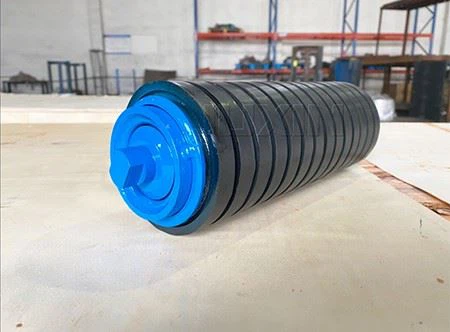

The operating environment is also a key factor. Extreme temperatures can have a big impact on HDPE rollers. In very cold conditions, HDPE becomes more brittle. If the rollers are subjected to sudden impacts or high loads when it's cold, the chances of cracking go up. On the other hand, in extremely hot conditions, HDPE can soften, and if it's then put under stress, it could crack or deform.
Load and impact are self - explanatory factors. If the rollers are overloaded or frequently hit by heavy objects, they're more likely to crack. For instance, in a conveyor system where heavy materials are constantly being dropped onto the rollers, the impact can cause micro - cracks over time, which can gradually grow and lead to full - blown cracks. However, Trough Carrier Impact Roller is designed to handle such impacts better, but we still need to ensure that the load is within the recommended capacity.
Another aspect is chemical exposure. HDPE is generally resistant to many chemicals, but certain solvents or strong acids and alkalis can weaken the material. If the rollers are in an environment where they come into contact with these harmful chemicals, it can increase the risk of cracking. As a supplier, we can provide information on the chemical resistance of our HDPE rollers and recommend suitable protection measures if needed.
Now, let's compare HDPE rollers to some other types, like the Side Guide Roller. Side guide rollers are often used to keep the conveyor belt in place. Steel side guide rollers are very strong but are vulnerable to corrosion. HDPE side guide rollers, on the other hand, have better corrosion resistance but need to be carefully monitored for the cracking factors we've discussed.
To sum it up, HDPE rollers are not inherently prone to cracking, but it all boils down to how they're made, what kind of environment they're in, and how they're used. As a supplier, we take every possible step to ensure the quality of our HDPE rollers. We conduct thorough quality checks during the manufacturing process, provide detailed installation and maintenance guidelines, and are always ready to offer advice on how to use the rollers to minimize the risk of cracking.
If you're in the market for HDPE rollers or any other types of rollers, we'd love to have a chat with you. We can share more about our products, answer any questions you might have, and help you choose the best solution for your specific needs. Whether you're dealing with a new project or looking to replace some old rollers, we're here to support you. So, don't hesitate to reach out and start a discussion about your procurement requirements.
References
- General knowledge on HDPE materials and their properties from industry textbooks
- In - house research and testing data on HDPE rollers' performance under different conditions