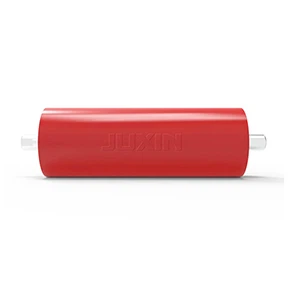
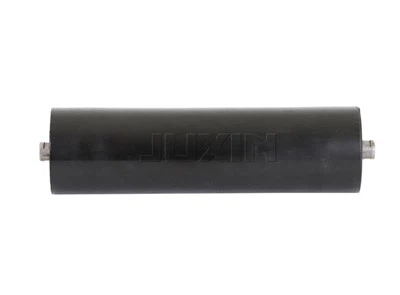
Impact idlers are the main elements of a belt conveyor in material handling systems of heavy industries like coal mining, ports, and power to maintain the stable operation and even increase the service life. These elements are placed below the loading points of the conveyor, where they have the main task of absorbing the enormous kinetic energy of falling materials, which tend to be the shock absorbers of the system.
The market features two main technical schools: the conveyor rubber ring impact roller and the rubber-coated roller. In spite of the fact that their names are similar, and they are designed to achieve the same end, they are very different in terms of thought design, production processes, performance, and use of various applications.
Impact idlers are used in a belt conveyor to absorb shock, protect belts, and extend system life, and different loading conditions demand different buffering technologies. The improper choice of an impact idler may result in more belt wear, more noise, trapped materials, or reduced service life, whereas the appropriate one can provide quantifiable benefits in terms of reliability, safety, and long-term cost management. This is the reason why a belt conveyor uses different impact idlers.
The following content will aid in making the best decision in the process of equipment selection.
Introduction: What You Will Learn in This Guide
When you should use a conveyor rubber ring impact roller vs a rubber-coated roller.
How roller rubber rings and rubber roller covers absorb impact differently.
Which roller is better designed to work in high-impact, wet, abrasive, or noise-sensitive conditions.
How rubber roller coating quality affects friction, heat, and service life.
What maintenance and lifecycle costs customers should expect.
Rapid Comparison Table: Two Impact Idlers Explained
|
Decision Factor |
||
|
Buffering Design |
Discrete elastic units (roller rubber rings) |
Continuous elastic surface (rubber roller covers) |
|
Impact Absorption |
Layered, segmented buffering |
Uniform, high-capacity buffering |
|
Friction |
Moderate |
High (excellent anti-slip) |
|
Heat Dissipation |
Excellent (air gaps) |
Moderate (rubber insulation) |
|
Maintenance |
Replace individual rings |
Re-lag or replace the entire roller |
|
Best For |
Medium impact, wet/sticky materials |
Heavy impact, abrasive, high-load zones |
|
Lifecycle Cost |
Low upfront, moderate lifespan |
Higher upfront, longer service life |
What are the Core Definitions and Design Concepts of Two Rollers?

A Conveyor Rubber Ring Impact Roller typically refers to multiple independent, elastic roller rubber rings press-fitted onto a steel roller body. Its design nature is that of a discrete elastic unitization. Each of the roller rubber rings acts as an independent buffering unit with gaps between them. This structure allows the conveyor rubber ring impact roller to absorb and disperse impact forces through the deformation of the roller rubber rings and minor displacements between them, providing layered and targeted buffering.

A Rubber-coated Roller, however, refers to a process where a continuous layer of rubber or other polymer elastic material (such as polyurethane) is tightly wrapped and bonded to the entire outer surface of the metal cylinder through a rubber roller coating or vulcanization process. Its fundamental principle is the so-called integrated surface protection. By forming a seamless, uniform elastic protection layer via rubber roller coating, it provides an integrated buffering support surface for the belt while increasing friction to prevent slipping.
What are the Major distinctions in various impact rollers?
To more intuitively show the differences between these two types of impact idlers used in a belt conveyor, we compare their core characteristics below:
|
Comparison Dimension |
||
|
Core Structure |
Steel roller body + discrete roller rubber rings (fixed by locking iron rings). |
Steel roller body + integrated, continuous rubber roller covers. |
|
Production Process |
Mechanical assembly; pre-fabricated roller rubber rings are sleeved on the body and welded at both ends. |
Vulcanized bonding; the rubber roller coating is firmly bonded to the cylinder through a thermal vulcanization process. |
|
Buffering Mechanism |
Discrete elastomer buffering relies on individual compression of roller rubber rings. |
Continuous surface buffering relies on the uniform deformation of the rubber conveyor roller covers. |
|
Friction Properties |
Moderate; the roller rubber rings have intermittent contact with the conveyor belt. |
Excellent; the smooth rubber roller covers provide a stable and high coefficient of friction to prevent slipping. |
|
Wear & Dust Resistance |
Worn roller rubber rings can be replaced individually; however, fine material may accumulate in the gaps. |
Excellent overall wear resistance. While large rollers are frequently re-lagged, smaller lagged impact idlers are often treated as replacement items due to the high labor-to-cost ratio of repairs, unless cold-bonding repair kits are readily available on-site. |
|
Technical Parameters |
Diameters: 89mm, 108mm, 133mm, 159mm; Hardness: Shore A 60°-85°; Spacing: 100-600mm. |
Wide diameter range (25mm to 89mm+); Materials: Natural rubber, PU, or ceramic; Customizable rubber conveyor roller covers thickness. |
|
Cost Characteristics |
The initial purchase cost is usually lower; the maintenance of individual roller rubber rings is flexible. |
Initial cost is higher, especially for high-performance rubber roller coating, but service life is longer. |
|
Thermal Properties |
The conveyor rubber ring impact roller excels in high-speed applications due to its discrete design. The gaps between the roller rubber rings act as natural ventilation channels, allowing air to circulate and dissipate heat from the steel roller body more effectively. |
The thick, continuous rubber conveyor roller covers act as an insulator. This can lead to heat retention within the roller core. In extremely high-speed or high-ambient temperature environments, this heat can potentially affect the bond strength of the rubber roller coating. |
|
Common Failure Modes
|
Ring shifting along the axis, splitting of the rubber due to aging or overload, or failure of the locking collar/iron ring. |
Delamination (bond failure between rubber and steel), or hydrolysis (specifically for certain Polyurethane materials in hot, wet environments). |
What does two Impact Roller Maintenance Need?
To ensure that impact idlers in a belt conveyor remain functional, a structured maintenance plan is essential.
|
Roller Type |
Inspection Interval |
Key Focus Areas |
|
Every 1–2 Months |
Check for "gap clogging" where fine debris accumulates between roller rubber rings. Inspect for missing or shifted rings. |
|
|
Every 3–4 Months |
Inspect rubber roller covers for "delamination" or "edge peeling" at the bond site. Check for uneven wear on the rubber roller coating. |
What are the Materials and Production of the two Impact Rollers?
| Roller Type | Material Selection | Production Process |
| Conveyor Rubber Ring Impact Roller | The conveyor rubber ring impact roller often uses roller rubber rings made of natural rubber (NR) or nitrile rubber (NBR) to provide good elasticity and moderate wear resistance. | The mechanical assembly of a conveyor rubber ring impact roller is relatively simple, requiring lower production precision for the roller rubber rings. |
| Rubber Coated Roller | For a rubber-coated roller, material choices are more diverse. In addition to natural rubber, polyurethane (PU) is also used in harsh environment applications, which has a high degree of wear resistance. Additionally, ceramic rubber roller coating can extend service life by 8 to 10 times compared to standard rubber. | The vulcanization process for rubber conveyor roller covers is the technical core. Quality depends on the rubber compound and the adhesion of the rubber roller coating to ensure it does not delaminate under high-speed or heavy-load conditions. |
Which Scenarios Best Fit Different Impact Roller Types?
Choosing the right type of impact idlers used in a belt conveyor depends on specific working conditions.
When to prioritize the conveyor rubber ring impact roller
• Medium-to-Low Impact Projects: It is the best solution when dealing with light bulk material or completed packaging bags, and cost is a consideration.
• Maintenance-Heavy Locations: In mining areas where equipment is easily damaged, the ability to quickly replace individual roller rubber rings reduces downtime.
• Wet or Sticky Material Environments: The discrete structure of the roller rubber rings helps prevent material accumulation on the roller surface.
When to prioritize the rubber-coated roller
• High Impact and Heavy Load Conditions: Best for ore, large stones, and metallurgical raw material discharge points where rubber roller covers can handle massive shocks.
• Strict Anti-Slip Requirements: These rollers are widely used in driving or braking segments where the high friction of the rubber roller coating is essential.
• Corrosive or High-Wear Environments: In chemical or coal washing plants, specialized rubber conveyor roller covers (like PU or ceramic) offer better protection.
• Noise-Sensitive Indoor Environments: In logistics centers or food processing plants, polyurethane rubber roller covers provide a much quieter operation.
What are the Market Trends of Two Impact Rollers?
Currently, the market for impact idlers used in a belt conveyor is highly competitive. The Conveyor Rubber Ring Impact Roller maintains a stable share in traditional industries due to its cost advantage. Conversely, the Rubber-coated Roller is moving toward high performance, functionalization, and longevity. High-end products using ceramic rubber roller coating or integrated "smart" sensors are gaining higher value-added status.
In terms of pricing, a standard conveyor rubber ring impact roller typically costs dozens of RMB. Depending on the size and the quality of the rubber roller coating, a rubber-coated roller can range from over a hundred RMB to over a thousand RMB for high-performance customized versions.
Which Impact Idler is Best for Your Conveyors?

The Conveyor Rubber Ring Impact Roller and the Rubber-coated Roller are not simple substitutes but technical solutions for different needs.
• The conveyor rubber ring impact roller is an "economical tactical choice" that wins with a modular design, suitable for moderate impacts and budget-conscious maintenance.
• The rubber-coated roller is a "high-performance strategic investment" that excels in integrated design and superior durability, making it the preferred choice for harsh conditions and long-term cost reduction.
When possible, it is best to ask the suppliers who are qualified to do actual tests, or at least give a reference to their successful cases in similar industries, to be sure that the selection is foolproof.
It is with the help of the analysis that you, when you have it, will be able to look past the resemblance of their names and see the underlying difference between the two kinds of impact idlers, to provide your conveyor system with the most appropriate shock-absorbing armor and realize a two-fold gain in efficacy and effectiveness.
Connact to professional custom impact idlers manufacturer
We will be able to offer you custom impact idlers. Our product range encompasses advanced rubber roller coating technologies, including rubber, PU, and ceramic options, as well as proven designs for numerous industries, such as mining, ports, and power plants. We can assist you in standardizing the impact idlers within the system and make maintenance planning a competitive edge.
Author Profile
Li Hui, General Manager of Hebei Juxin Conveying Engineering Co., Ltd., is a visionary leader with profound expertise in belt conveyor systems. Her journey began by establishing Juxin's Overseas Business Department, achieving a remarkable export breakthrough that inspired the bulk material handling industry. With extensive real-world experience, including in-depth market research across six countries and establishing five overseas branches, Li Hui understands diverse material handling requirements globally. Her commitment to "healthy businesses," driving Juxin's transformation to data-driven management, and leading R&D efforts for different types of conveyor systems demonstrates her ability to empathize with user pain points, providing practical, innovative conveyor selection guide insights and robust conveyor solutions.
WeChat
+86 13920569869
Linkedin
https://www.linkedin.com/in/Sunshine Lee/
E-Mail
sales011@dgsconveyor.com