1. Closed-loop and Friction Drive
The belt conveyor system comprises two end rollers (a driving roller and a reversing roller) along with a closed-loop conveyor belt that is tightly mounted on them. The driving drum rotates via power transmission from the motor and reducer, utilizing the friction between the conveyor belt and its inner surface to drag the belt in a cyclic motion. The reversing drum serves to alter the running direction of the conveyor belt or adjust the wrapping angle to enhance the friction force.
2. Material Handling and Transmission
Material is loaded onto the conveyor belt through a loading device (e.g., a hopper). The static friction between the conveyor belt and the material ensures synchronous movement with the belt, and unloading is completed at the discharge end (or via a discharge mechanism). The conveyor belt functions as both a traction component and a load-bearing element, requiring a cover layer with high tensile strength, wear resistance, and material-specific properties.
Cooperation Mechanism of Key Components
1. Drive System
The drive system includes the motor, reducer, coupling, and driving drum. The surface of the driving drum is typically rubberized to enhance friction, particularly in wet or high-power scenarios. High-power systems may incorporate hydraulic couplings or backstops to prevent reverse rotation.
2. Tension Device
The tension of the conveyor belt is maintained using screw, weight, or winch mechanisms to prevent slippage and limit sagging between rollers. For instance, short-distance conveyors use screw tension, while long-distance conveyors employ heavy hammer or vertical heavy hammer systems.
3. Roller Support System
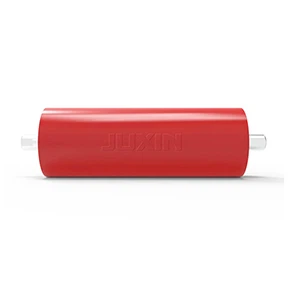
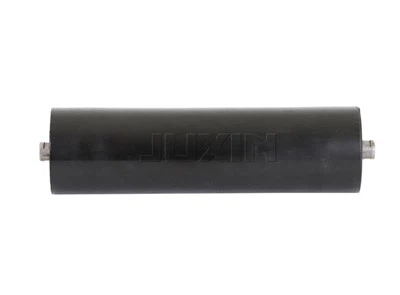
- Bearing Branch: groove rollers are utilized for bulk material transport to increase capacity; parallel rollers are employed for item conveyance.
- Return branch: V-shaped or anti-V-shaped rollers are employed to prevent belt deviation.
- Buffer roller: The impact of the material is mitigated at the receiving point, with spacing set to 1/2 to 1/3 of the bearing roller's distance.
- Aligning rollers: Automatically correct any conveyor belt misalignment.
Material Handling Process
1. Loading and Stable Transportation
The material is evenly distributed from the loading point to the center of the conveyor belt. Guide grooves control material flow direction and prevent dust generation. Conveyor belt speed is typically maintained below 3.15 m/s to avoid accumulation or overflow caused by material inertia.
2. Unloading Method
- Head discharge: Material is discharged directly via the drum's centrifugal force.
- Midway discharge: A plow-type unloading device (suitable for particle sizes ≤50 mm) or a mobile discharge truck is utilized to accommodate multi-point discharge requirements.
Adaptability and Expansion Function
1. Transport Scenario
Horizontal, inclined (maximum inclination up to 90°), or curved layouts are applicable, suitable for mining, port, chemical industry, and other scenarios. For instance, long-distance transportation in inclined tunnels or open-pit coal mining operations.
2. Special Design
- Air cushion: Gas film technology reduces friction, ideal for high-speed transport of lightweight materials.
- Tubular type: Closed transmission prevents dust ingress and adapts to complex spatial lines.
- Vertical lift: Wave-shaped belt conveyors enable vertical transport.
Fifth, Auxiliary Systems and Control
- Cleaning device: The head cleaner removes residual material from the working surface, while the empty section cleaner prevents non-working surface contaminants from entering the drum.
- Safety protection: Features include belt deviation monitoring, slip alarms, emergency rope switches, etc., ensuring safe operation.