


Hey guys, it’s Jake here from the conveyor belt team at AB Conveyor Parts – you know, the folks who’ve been helping businesses move materials smoothly for over a decade. I get questions every single day, and one that’s been popping up a lot lately is: “Are nylon conveyor belts suitable for inclined conveying?” Let’s cut to the chase – this one’s not a yes/no answer, because it depends on so many factors. But since I’m the nylon conveyor belt supplier, I’m gonna break this down like I would for a buddy who’s actually trying to make this work for their operation.
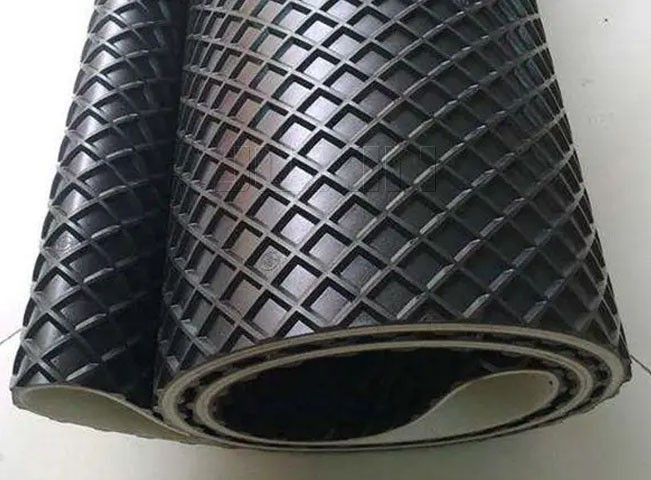

First, let’s start with the basics so we’re all on the same page. Nylon conveyor belts – you can check out the details on our nylon conveyor belt page here – are made with a fabric core of nylon polyamide, right? They’re super strong for their weight, stretch way less than polyester belts, and hold up pretty well to abrasion. Inclined conveying, though, is when you’re moving stuff uphill – we’re talking any angle steeper than, like, 5 degrees, up to even 30 or 35 degrees in some cases. That’s a whole different ballgame than flat conveying, because gravity’s working against you, and your belt has to grip the material hard enough so it doesn’t slide back.
So let’s dive into when nylon actually works great for inclines. For starters, if your incline is moderate – like 5 to 18 degrees – nylon belts are solid. Why? Their tensile strength is a big plus here. When you’re running an incline, the belt has to pull the weight of the material up, plus the tension from the side of the conveyor that’s going uphill. Nylon’s high breaking strength (way higher than cotton belts, for example) means you don’t have to oversize the belt and add unnecessary cost. Also, nylon has really good tear resistance – which is crucial when you’re moving bulky or sharp materials uphill, because a small tear can get worse fast as the material shifts on an incline.
Wait, but here’s the catch: regular flat nylon belts might struggle with material slide if you’re going steeper than 18 degrees. That’s why a lot of our customers pair nylon cores with pattern rubber covers. If you need to move things at a steeper angle (18 to 30 degrees), patterned conveyor belts or chevron rubber conveyor belts are game-changers. The pattern – whether it’s chevrons, bars, or diamonds – digs into the material, stops it from rolling or sliding back. And since we use nylon fabric as the core for those too, you still get that strength you need for inclines without sacrificing the grip. I had a customer last month moving crushed rock up a 22-degree incline – they tried a polyester belt first, which stretched so bad the patterns wore out in two weeks, and switched to a nylon-core chevron belt. It’s still going strong three months later, no issues with stretch or slide.
Another big win for nylon on inclines: its flexibility. Wait, why does that matter? Because inclined conveyors usually have more idlers to support the belt as it goes uphill, especially around the head and tail pulleys. Nylon belts bend easier than steel cord conveyor belts, which is important because too much stiffness can cause excessive wear on the edges, especially when you’re turning or navigating the steeper sections. Steel cord belts are awesome for heavy, long-distance runs, but they’re way stiffer – not ideal for the more frequent bends and tight turns common in inclined setups. I always tell customers if their incline has any twists or turns in the vertical path, nylon’s the better pick over steel cord.
But let’s be real – nylon isn’t perfect for every inclined job. When would it not work? If you’re dealing with really high temperatures, for example. Nylon can start to degrade above 180°F, so if you’re moving hot clinker or steel parts that are 200°F+ up an incline, you’ll need a heat resistant conveyor belt. That’s not to say nylon’s useless here – we make heat-resistant nylon belts too, but even those have a lower temp threshold than specialty heat-resistant belts with different rubber compounds. Another time nylon might not be the best is if you’re moving super heavy, dense materials over extremely long inclined runs (like 1000+ feet uphill). For those, steel cord is more rigid and can handle that sustained heavy tension better, even though it’s stiffer.
Let’s talk about real-world use cases to make this concrete. I recently worked with a construction company that was moving sand and gravel up a 12-degree incline to a roof for a building project. They tried a cotton belt first, which stretched so much that material kept rolling back, and they had to stop every hour to clear the slide. Switched to a 2-ply nylon belt with a smooth cover (since sand doesn’t need extreme pattern grip) – and now they run 8 hours straight, no issues. The nylon’s low stretch meant the belt stayed tight, so the sand didn’t slide back, and the abrasion resistance held up to the gravel for months. Another customer is a food processing plant moving grain up a 15-degree incline – they use a smooth nylon belt with a food-grade rubber cover, and it’s perfect because the grain flows evenly, no spillage, and the nylon doesn’t absorb moisture from the grain like some other fabrics might.
Wait, people often ask me about stretch – why does that matter for inclines so much? Let me explain: when a belt stretches, the distance between idlers increases, and the material has more room to shift. On flat conveyors, that’s annoying, but on inclines, it’s a safety and efficiency hazard. If material slides back, it can pile up at the bottom of the conveyor, jam the rollers, or even cause the belt to slip off the pulleys. Nylon has a permanent elongation of only about 10% at break, but operational elongation is around 2-3% – way lower than polyester’s 4-5% operational elongation. That means less stretch over time, so your belt stays where it’s supposed to on the incline. We recommend checking the belt’s elongation rating when sizing for inclines – nylon’s lower stretch is a huge advantage here.
Another thing to consider is the cover rubber compound. For inclined conveying, you want a cover that’s grippy but also durable. If you’re moving wet or slippery materials like mud or pulp, a smooth nylon belt might not have enough grip, but adding a slight herringbone pattern (a type of patterned conveyor belt) made with nylon core works. The herringbone pattern channels water or excess material away, so it doesn’t reduce friction, while still letting the material move uphill. For abrasive materials like ore or concrete, a abrasion-resistant rubber cover over nylon core is the way to go – it holds up to the constant friction of the material being dragged up the incline.
Let’s also address some common myths I hear all the time. Some folks say nylon belts aren’t good for inclines because they’re “too weak” – that’s only true if you’re using a single-ply belt for a heavy load. We offer nylon belts with plies ranging from 2 to 8, so you can size it exactly for your load and incline angle. Another myth: pattern belts on nylon cores are more expensive than flat steel cord belts. Yeah, upfront cost is a bit higher, but when you factor in lower stretch (less maintenance on pulleys and idlers), better abrasion resistance (longer belt life), and less material spillage (less cleanup time and wasted product), it’s actually a better long-term investment. I’ve had customers switch from steel cord to nylon-core chevron belts and save 20% annually on maintenance and replacement parts.
Wait, what about if your incline is really steep, like 30 degrees or more? In that case, even with patterns, you might need a different setup – like cleats or sidewalls. And while we can add cleats to nylon belts, I usually recommend checking if a different type of belt might work better, but nylon is still a viable core for those cleated belts. For example, a cleated nylon belt can handle 25-30 degree inclines with bulky items like boxes or parts, no problem.
So putting it all together: are nylon conveyor belts suitable for inclined conveying? The answer is a resounding yes – but with some caveats. If your incline is moderate (5-18 degrees), you’re moving materials that aren’t super hot, heavy, or slippery, and you prioritize low stretch and good flexibility, nylon is perfect. If your incline is steeper (18-30 degrees), pair a nylon core with a patterned or chevron cover to add the grip you need. Just avoid nylon if you’re dealing with extreme heat (over 180°F) or ultra-heavy long inclined runs, in which case you’d be better off with a heat resistant conveyor belt or steel cord conveyor belt.
At the end of the day, every operation’s needs are different. If you’re not sure what works for your inclined conveying setup, hit us up – we’ve got the nylon conveyor belt options, pattern covers, and expertise to help you figure it out. We’ve been helping businesses of all sizes tweak their conveyor systems for inclines, and we’re happy to walk you through sizing, cover compounds, and anything else you need to make it work smoothly.
References
- Conveyor Belt Equipment & Services. (2022). Selection Guide for Inclined Conveyors. Industrial Conveyor Magazine, 45(3), 12-18.
- Rubber Manufacturers Association. (2021). Tensile Properties of Fabric-Reinforced Conveyor Belts. RMA Technical Report, 2021-04.
- Material Handling Industry Association. (2023). Best Practices for Inclined Conveying of Bulk Materials. MHIA White Paper, 11-15.
- Global Industry Analysts. (2022). Nylon Conveyor Belt Market Trends: Performance for Angle Conveying. Market Research Report, Report #GI-22-415.


