

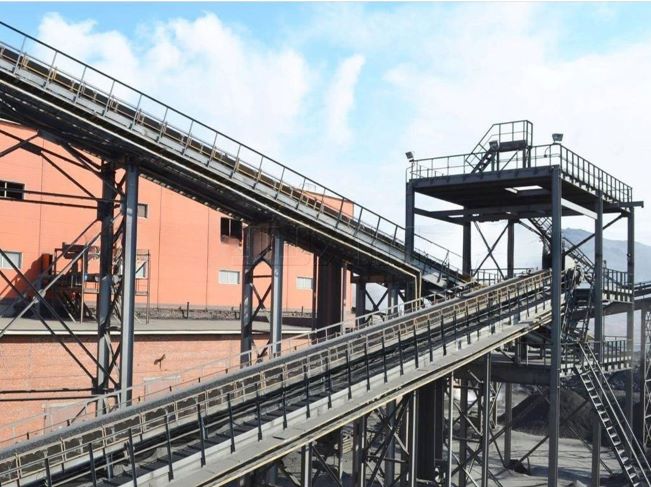


Hebei Juxin Conveyor Engineering Co., Ltd. is one of the most credible manufacturers and suppliers of inclined belt conveyor systems in China. Be free to buy bulk inclined belt conveyor systems in stock here from our factory. Customized orders are welcome.
Juxin's Inclined Cleated Belt Conveyor delivers the ultimate space-saving bulk-handling solution, safely conveying material at 30° to 90° vertical elevation with zero spillage. As an experienced Inclined Cleated Belt Conveyor manufacturer in China, we provide DIN/ISO-compliant inclined belt conveyor designs that fit your layout. We pack these systems with ST5000 high-tension corrugated belts, heavy-duty 560kW drive motors, and anti-rollback brakes you can trust. It is built for continuous, safe vertical lifts in tough environments such as mining, metallurgy, and tunneling.
Why Choose JUXIN

Your Specialist Conveyor Component Manufacturer
Hebei Juxin Conveyor Engineering Co., Ltd. offers customized solutions tailored to your specific material handling requirements.
Trusted by Fortune 500s, with over 1,000+ successful projects globally.
Provide free 3D conceptual designs and site-specific technical proposals before manufacturing.
Deliver 100% custom-engineered conveyor systems tailored to your specific site, material, and capacity needs.
Guarantee precision manufacturing with 300+ advanced automated production machines.
Deliver seamless EPC project integration and 24/7 expert after-sales support.
Application

Mining
Mining operations haul ore up pit ramps and raise it out of underground levels, where any grade change risks material rolling back on a stalled belt. Our Inclined Belt Conveyor Systems mandate a roller backstop above 12 degrees, the one spec that makes an Inclined Belt Conveyor System safe to run on a mine haul grade.
Bulk Ports & Marine Terminals
Bulk ports and marine terminals load vessels by lifting stockpiled cargo from ground level up to deck height, and that one climb is where spillage costs the most in lost tonnage. Our Inclined Belt Conveyor Systems use cleated belting and sealed transfer points on that rise, so an Inclined Conveyor Belt System Manufacturer in China actually delivers the tonnage ports bill for.
Metallurgy
Steel and sintering plants lift feed from ground-level stockpiles up to the furnace charging level, and that rise has to happen without scorching the belt surface. Our Inclined Belt Conveyor System pairs HR heat-resistant covers rated to 200 degrees with incline backstops, the combination that keeps an Inclined Conveyor Belt System Manufacturer in China running metallurgical feed lines reliably.
Tunnelling & Underground
Tunnel headings and underground declines move spoil and ore on grades that can exceed 20 per cent, and losing grip there halts the whole excavation face. Our Inclined Belt Conveyor System pairs a roller backstop with an electro-hydraulic brake on every decline run, making an Inclined Belt Conveyor System the deciding factor in whether a tunnel face keeps advancing.
Recycling & Waste
Recycling and waste lines lift sorted material through several grade changes in one sequence, and a belt that slips at any of them contaminates the whole batch downstream. Our Inclined Belt Conveyor Systems fit Chevron-cleated, reversible belting rated to 40 degrees, so an Inclined Belt Conveyor System holds material in place through every incline on the line.
Aggregates & Construction
Aggregate and construction plants stack and reclaim crushed stone on inclined stockpile conveyors dozens of times a shift, and that repetition wears generic belting out fast. Our Inclined Belt Conveyor Systems fit wear-resistant covers sized for 30-degree stockpile grades, keeping an Inclined Belt Conveyor System running through that daily reclaim cycle.
Design

Incline Safety Control Built Into the Spec, Not Added LaterAny operation that lifts material instead of moving it flat needs grade safety built into the spec sheet, not bolted on afterward. Every Inclined Belt Conveyor System we build above 12 degrees carries a roller backstop as standard, the baseline a genuine Inclined Belt Conveyor System has to meet before it ever leaves the shop. Cleated or Sidewall Belting Matched to the Real GradeA steeper grade needs belt profile, not just a flat belt tilted upward, to keep material from sliding back down. Our Inclined Belt Conveyor Systems fit Chevron cleats for runs up to 40 degrees and sidewall belting beyond that, so an Inclined Conveyor Belt System Manufacturer in China matches the belt to the real incline, not a generic one. Multi-Drive Power Balance for Sustained Climbing LoadClimbing a continuous grade strains a single motor in ways flat haulage never does. Our Inclined Belt Conveyor System uses fluid-coupling or VFD multi-drive layouts to share that load across two or three motors, so an Inclined Belt Conveyor System built this way doesn't burn out the one motor doing all the lifting work. Full-Line Fault Detection on Every Grade ChangeA line that changes elevation more than once needs fault detection at every transition, not only at the head and tail. Our Inclined Belt Conveyor Systems run two-stage misalignment and slip detection through each incline section, so an Inclined Conveyor Belt System Manufacturer in China catches a problem before it becomes a spill or a tear. Energy-Efficient Lift With Minimal Power LossLifting material costs real energy, and a drive that wastes power on the climb adds up over a full shift. Our Inclined Belt Conveyor System targets low-resistance idlers rated under 2.2N and balanced multi-drive power, keeping an Inclined Belt Conveyor System's energy cost per ton lifted as low as the grade allows.
|
Advantage
Cleated or Sidewall Belt
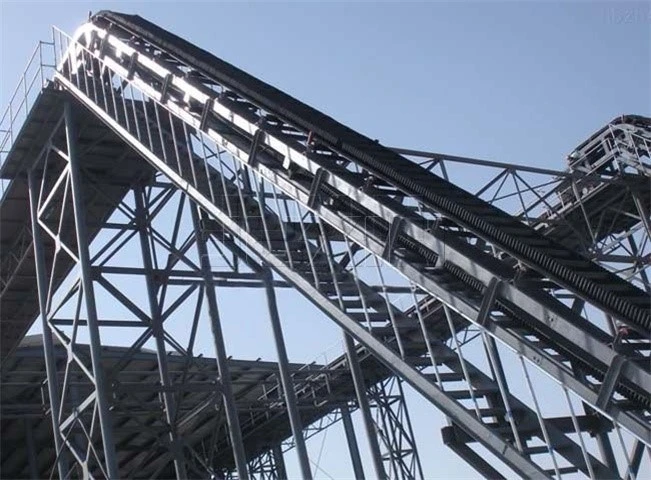
An incline conveyor's belt has to do more than carry load, it has to resist sliding back down the slope under its own weight. Our Inclined Belt Conveyor Systems fit Chevron-cleated belting rated to 40 degrees for moderate rises and sidewall belting with cross ribs for steeper, near-vertical lifts, so an Inclined Belt Conveyor System holds material securely at whatever grade the application actually runs.
Drive Unit
A drive unit on an incline has to manage climbing power, runaway prevention, and balanced load across multiple motors all at once. Our Inclined Belt Conveyor System specifies roller backstops above 12 degrees, electro-hydraulic brakes on every decline run, and VFD or fluid-coupling multi-drive layouts together, so an Inclined Conveyor Belt System Manufacturer in China treats the climb and its safety margin as one engineered system, not separate add-ons.
Low-Resistance, Sealed Idler Rollers
Idlers on an inclined run carry load at an angle, which concentrates wear differently than a flat section ever does. Our Inclined Belt Conveyor Systems specify rotation resistance of 1.8 to 2.2N against a 3.0N national ceiling, 500-hour water-spray sealing, and a 30,000 to 50,000-hour design life, so an Inclined Belt Conveyor System keeps its idlers turning through angled load a flat-line idler was never built for.
Precision-Balanced Pulleys
A pulley on an incline carries belt tension a flat-run pulley never sees, and any imbalance there shows up as slip exactly where slip matters most. Our Inclined Belt Conveyor System uses flaw-detected GMAW-welded shells, dynamic balancing on heavy units, and radial runout held to 0.75mm on high-tension pulleys, so an Inclined Conveyor Belt System Manufacturer in China keeps grip consistent all the way up the slope.
Reinforced Frame & Transfer Points
A frame built for a flat line doesn't automatically hold up on a grade, and transfer points where material first lands on the incline take extra impact from the angle itself. Our Inclined Belt Conveyor Systems hold idler bracket trough angle within 1 degree and reinforce transfer points with wear plate and buffer beds, so an Inclined Belt Conveyor System stays aligned exactly where the angled load concentrates.
Safety & Control System
An incline conveyor's biggest risks, slip, runaway, and misalignment under angled load, differ from a flat line's risks, so detection has to be tuned for them specifically. Our Inclined Belt Conveyor System runs two-stage misalignment switches, slip and overspeed detection, and PLC-interlocked control calibrated to each grade, so an Inclined Conveyor Belt System Manufacturer in China protects the one stretch of line where gravity works against the belt, not just with it.
Service

Uncompromising Quality Control
We enforce strict, multi-stage inspections on every stacker, meticulously verifying everything from raw materials and structural welding to final full-load operational performance.
Transparent Factory Inspection
Experience absolute transparency. Verify our manufacturing, quality control, and testing centers through on-site visits, real-time video inspections, or immersive 360° VR factory tours from your office.


Engineering & Integration Support
We engineer complete solutions. Our technical experts provide full support for equipment assembly, start-up commissioning, and the seamless integration of new components into your existing lines.
24/7 Comprehensive After-Sales
Backed by senior engineers, our 24/7 hotline provides immediate remote troubleshooting. We ensure peak performance through customized personnel training and the rapid on-site deployment of technicians.

Hot Tags: inclined belt conveyor systems, China inclined belt conveyor systems manufacturers, suppliers, factory
|
BW (mm) |
Sidewall Height (mm) |
Belt Speed (m/s) |
Angle β/(°) |
Delivery capacity (m³/h) |
Power (kW) |
|
300 |
40 |
0.8~2.0 |
30~90 |
18 |
1.5~18.5 |
|
60 |
24 |
||||
|
80 |
40 |
||||
|
400 |
60 |
0.8~2.0 |
34 |
1.5~18.5 |
|
|
80 |
60 |
||||
|
100 |
80 |
||||
|
500 |
80 |
0.8~2.0 |
84 |
1.5~18.5 |
|
|
100 |
112 |
||||
|
120 |
98 |
||||
|
650 |
100 |
0.8~2.0 |
156 |
1.5~2.2 |
|
|
120 |
140 |
||||
|
160 |
186 |
||||
|
800 |
120 |
0.8~2.5 |
186 |
2.2~5.5 |
|
|
160 |
318 |
||||
|
200 |
360 |
||||
|
1000 |
160 |
1.0~2.5 |
428 |
4.0~75 |
|
|
200 |
483 |
||||
|
240 |
683 |
||||
|
1200 |
160 |
1.0~3.15 |
535 |
5.5~110 |
|
|
200 |
765 |
||||
|
240 |
1077 |
||||
|
300 |
1358 |
||||
|
1400 |
200 |
1.0~3.15 |
920 |
5.5~160 |
|
|
240 |
1298 |
||||
|
300 |
1657 |
||||
|
400 |
2381 |
||||
|
1600 |
200 |
1.25~3.15 |
1074 |
5.5~160 |
|
|
240 |
1515 |
||||
|
300 |
1953 |
||||
|
400 |
2807 |
||||
|
1800 |
240 |
1.25~4.0 |
2200 |
7.5~185 |
|
|
300 |
2724 |
||||
|
400 |
4106 |
||||
|
500 |
5036 |
||||
|
2000 |
240 |
1.25~4.0 |
2480 |
11~220 |
|
|
300 |
3236 |
||||
|
400 |
4648 |
||||
|
500 |
5736 |
||||
|
2200 |
300 |
1.25~4.0 |
3612 |
11~220 |
|
|
400 |
5192 |
||||
|
500 |
6432 |
||||
|
630 |
7820 |
||||
|
2400 |
300 |
1.25~4.0 |
3992 |
11~220 |
|
|
400 |
5736 |
||||
|
500 |
7132 |
||||
|
630 |
8668 |
||||
|
Conveyor capacity is calculated based on 30° inclination Angle, maximum belt speed and minimum transverse partition spacing. |
|||||


