

Abstract Of Raw Material Blending Conveyor Systems

Application field
Ore material blending yards in steel mills and sintering plants.
System highlights
Uniform blending, stable operation, and high degree of automation.
Equipment selection
Fixed belt conveyor, Stacker Reclaimer, Conveyor Tripper Car, Reversible Shuttle Belt Conveyor
System services
Design and manufacture of complete ore blending yard stacking and reclaiming conveying system equipment for Juxin Steel Mill and Sintering Plant.
Introduction to Blending Yards
Function
Provide steel mills/sintering plants with high-quality smelting raw materials of stable composition.
Layout Types (Primarily Open-Air)
Single-Span Two-Pile System: Compact footprint, large single-pile storage capacity, and stable blending quality.
Double-Span Two-Pile/Four-Pile System: Flexible material supply but complex equipment configuration.
Stacking Methods
Herringbone Stacking: Simple operation, suitable for fine-grained materials (larger particle size distribution).
Diamond Stacking: Smaller particle size distribution, more complex operation.
Herringbone-Diamond Hybrid: Blending effectiveness between the above two.

Processing Flow Of Ore Blending Conveyor System
In specific scenarios or when raw material yards are equipped with fine crushing facilities for fluxes and fuels (crushed to 3–10 mm), most fluxes and fuels (e.g., coke powder) can be blended with iron ore raw materials. The remainder is adjusted and added at sintering plant proportioning bins. Before blending, large lumps and impurities in the ore must be screened out. Typically, iron-bearing materials for sintering should have a particle size <10 mm. Lump iron ore and fluxes for blast furnaces can also follow this blending process.
Blending involves layered, uniform stacking of pre-proportioned ore raw materials along the entire length of the pile using stacking equipment. Key principles include multiple thin layers, consistent layer thickness, and homogeneous distribution. After forming a layered pile, reclaiming equipment extracts material across the pile's vertical cross-section, ensuring each extracted portion contains all stacked layers. Concurrently, material layers are intermixed during reclaiming to achieve homogenization at every cross-section.
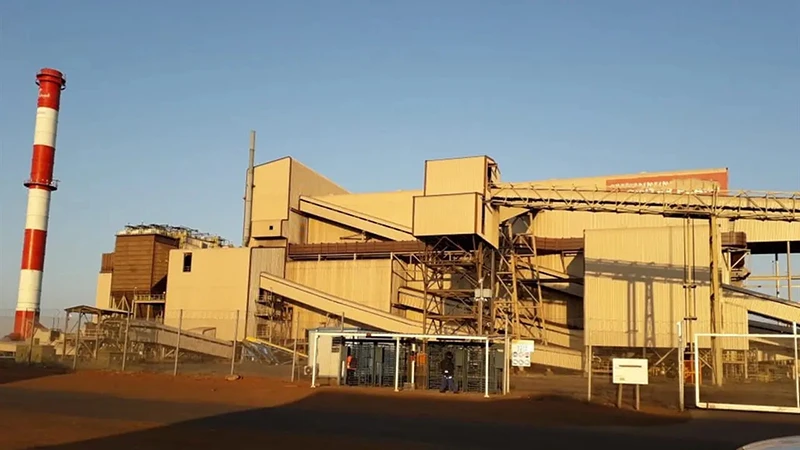
Key Equipments Of The Metro Tunnel Muck Disposal System
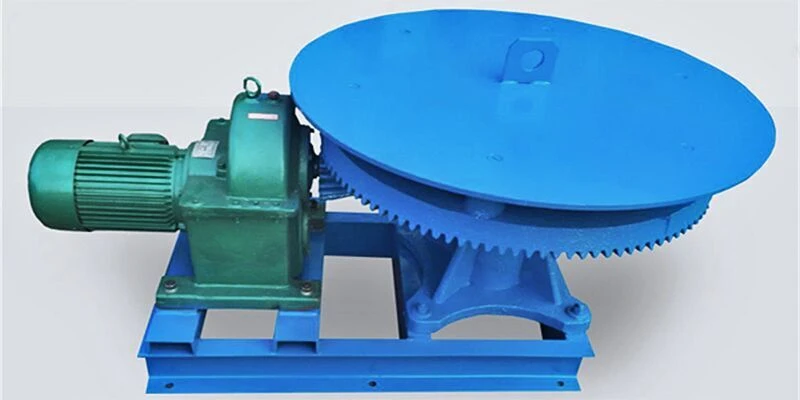
Pre-Blending Equipment
The Metro Tunnel Muck Disposal System usually uses Disc feeders, electronic weighing devices as pre-batching equipment.
Stacking Equipment
The Metro Tunnel Muck Disposal System usually uses Single Boom Stacker, Swing Arm Stacker, Reversible Shuttle Belt Conveyor as Stacking Equipment.
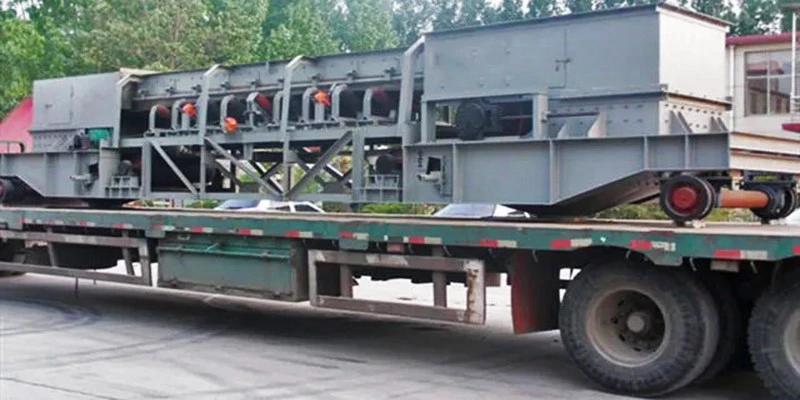

Reclaiming Equipment
The Metro Tunnel Muck Disposal System usually uses Drum Reclaimer, Scraper Reclaimer, Bridge-Type Double-Bucket Wheel Reclaimer as Reclaiming Equipment.
Auxiliary Equipment
The Metro Tunnel Muck Disposal System usually uses Bulldozers, front-end loaders, belt conveyors as Reclaiming Equipment.

Advantages of Raw Material Blending Conveyor Systems
Precise Proportioning
High-accuracy weighing equipment (e.g., electronic automatic scales) achieves proportioning precision of ±0.5%.
Optimized Layering
Each pile typically requires 400–500 layers (up to 700–1,000 layers), with uniform layer volumes.
Automation
Computer-controlled blending stackers ensure precise stacking motions, enhancing blending uniformity.
Role of Ore Blending Conveyor Systems
Ore blending conveyor systems specialize in pre-mixing raw materials to ensure uniform particle size and composition, thereby improving raw material quality and enabling downstream processing. Modern blending operations are primarily conducted in dedicated blending yards, though some plants implement them in sintering plant raw material warehouses. Given the diverse sources and compositional variability of steel mill ores, blending stabilizes sinter quality, optimizes blast furnace conditions, and enhances technical-economic performance.

Summary of Blending Yard Stacking Systems
Chinese steel mills widely adopt blending processes involving three core steps: proportioning, layered stacking, and cross-section reclaiming. Proportioning occurs at dedicated stations, while stacking and reclaiming take place in blending yards. Common layouts include single-span two-pile, double-span two-pile, double-span four-pile, and multi-span multi-pile systems, selected based on plant scale, site constraints, and material requirements. For example:
Small/medium mills or initial phases of large new mills often use single-span two-pile layouts.
Key equipment includes blending pile stacking conveyor belts, blending stackers, blending reclaimers, and blending pile reclaim conveyors, typically employing herringbone stacking (400–700 layers).
Challenges
1. Segregation at pile ends reduces sinter stability.
2. Single blending reclaimer configurations risk production halts due to equipment failures.
3. High capital and operational costs of stacker-reclaimers remain industry-wide concerns.
Supplier Of Raw Material Blending Conveyor Systems
Hebei Juxin is a professional manufacturer of Material Blending Conveyor System, offering comprehensive solutions for steel mill blending yard stacking and conveying. Contact us directly for tailored support.